News

Showing 49 results for Researcher: Kai Xiao

  • ORNL Placeholder Image

    March 11, 2026

    1 MIN READ

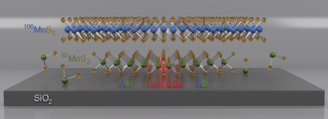
    Scientific Achievement: Mo isotope labeling and molecular dynamics (MD) calculations revealed how vdW interactions with the substrate control the synthesis pathway of bilayer MoS2 – driving underlayer growth on SiO2/Si but overlayer growth on sapphire.Significance and Impact: Work provides mechanistic insight into confined epitaxial growth and establishes isotope labeling as a powerful probe of 2D materials synthesis.DOI: 10.1021/acsnano.5c20844
  • ORNL Placeholder Image

    October 14, 2025

    1 MIN READ

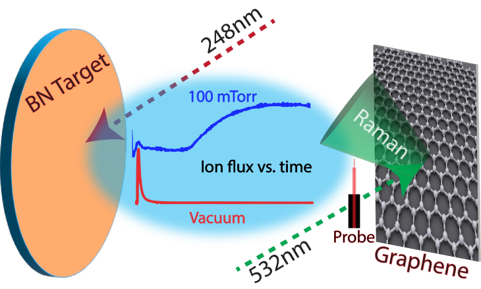
    Scientific Achievement: Ion flux diagnostics combined with in-situ Raman spectroscopy revealed that damage to monolayer (ML) graphene during pulsed laser deposition (PLD) of a protective layer is primarily driven by fast ions, and that their elimination results in damage free encapsulation of the 2D ML.Significance and Impact: This work establishes PLD as a scalable method for damage-free integration of 2D MLs into practical electronic, optoelectronic, and quantum devices.DOI: 10.1021/acsami.5c13634

  • ORNL Placeholder Image

    September 23, 2025

    5 MIN READ

    Researchers with the Department of Energy’s Oak Ridge National Laboratory and the University of Tennessee, Knoxville, have created an innovative method to visualize and analyze atomic structures within specially designed, ultrathin bilayer 2D materials. When precisely aligned at an angle, these materials exhibit unique properties that could lead to advancements in quantum computing, superconductors and ultraefficient electronics.

  • ORNL Placeholder Image

    July 2, 2025

    1 MIN READ

    Scientific Achievement: By resolving the atomic structure of individual layers in twisted bilayers, this work provides unprecedented access to dopant and defect distributions that were previously inaccessible due to moiré-induced obscurity.Significance and Impact: These advances for atomic-scale imaging open new pathways for correlating atomic structure with emergent quantum behaviors in twisted 2D moiré materials.DOI: 10.1021/acs.nanolett.5c01460

  • ORNL Placeholder Image

    September 16, 2024

    2 MIN READ

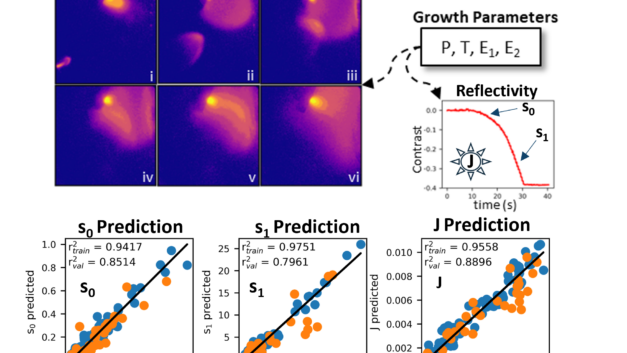
    In a game-changing study, ORNL scientists developed a deep learning model — a type of artificial intelligence that mimics human brain function — to analyze high-speed videos of plasma plumes during a process called pulsed laser deposition.

  • ORNL Placeholder Image

    June 19, 2024

    1 MIN READ

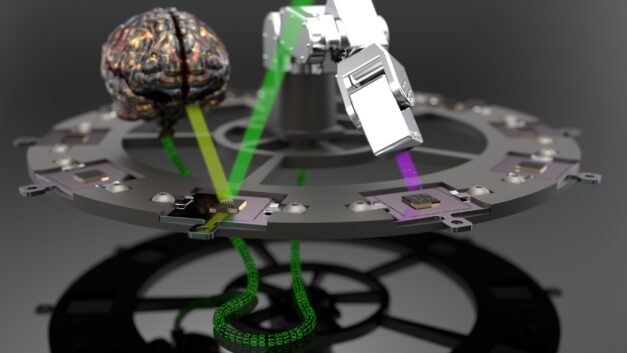
    Scientific Achievement: Autonomous synthesis by an automated PLD platform, in situ diagnostics, and AI-ML revealed the optimal growth regime and demonstrated 10x faster than traditional PLD synthesis. Significance and Impact: This study demonstrates a novel AI-ML guided synthesis approach that enables the accelerated discovery and autonomous optimization of the materials that can be synthesized by PLD. DOI: 10.1002/smtd.202301763

  • ORNL Placeholder Image

    June 11, 2024

    2 MIN READ

    Today, scientific discovery is accelerated by automated experiments, artificial intelligence and high-performance computing. A novel tool developed at ORNL that leverages those technologies has demonstrated that AI can influence materials synthesis and conduct associated experiments without human supervision.

  • ORNL Placeholder Image

    April 4, 2024

    1 MIN READ

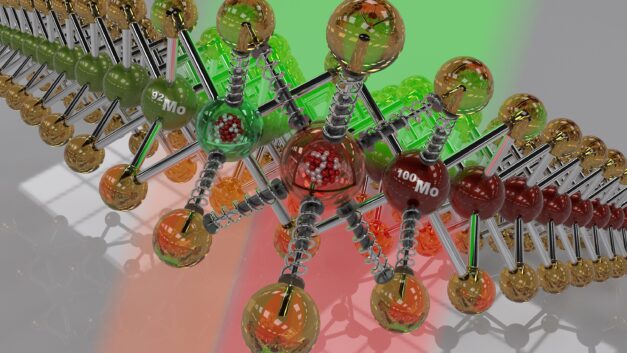
    Scientific Achievement: By growing lateral heterostructures of monolayer MoS2 with different Mo isotopes, researchers observed intrinsic isotope effect on photoluminescence, revealing how phonons couple strongly with excitons to anomalously shift the optical band gap in 2D materials compared to conventional semiconductors.Significance and Impact: This study presents a novel approach for tailoring the optical and electronic properties of 2D materials through isotope engineering for future optoelectronic devices.DOI: 10.1126/sciadv.adj0758

  • ORNL Placeholder Image

    January 12, 2024

    2 MIN READ

    Researchers demonstrated that stainless steel and other metal alloys coated with hexagonal boron nitride, or hBN, exhibit non-stick or low-friction qualities along with improved long-term protection against harsh corrosion and high-temperature.

1
2
5