News

Showing 18 results for Researcher: Vincent C. Paquit

  • ORNL Placeholder Image

    July 18, 2024

    4 MIN READ

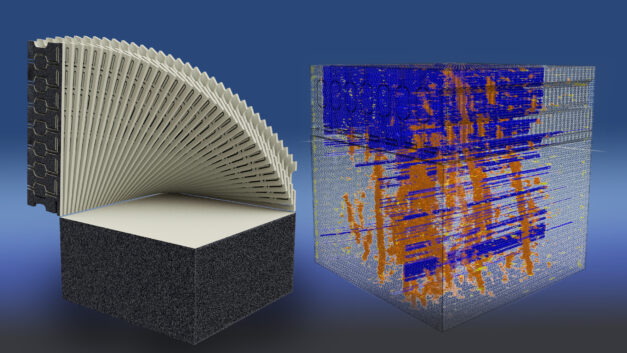
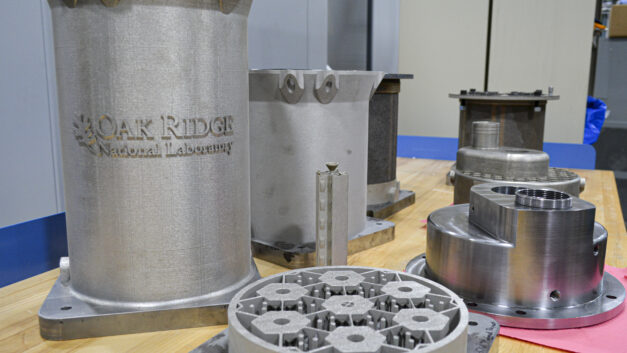
    The Department of Energy’s Oak Ridge National Laboratory has publicly released a new set of additive manufacturing data that industry and researchers can use to evaluate and improve the quality of 3D-printed components. The breadth of the datasets can significantly boost efforts to verify the quality of additively manufactured parts using only information gathered during printing, without requiring expensive and time-consuming post-production analysis.

  • ORNL Placeholder Image

    October 14, 2022

    5 MIN READ

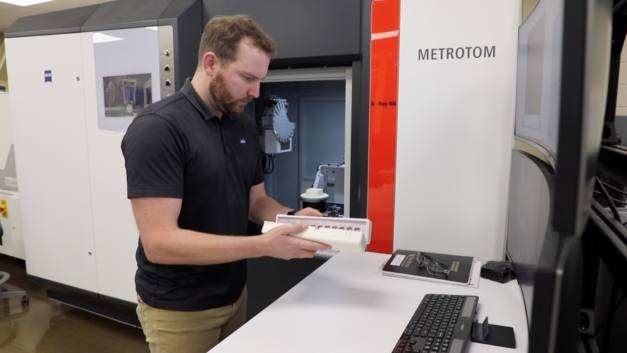
    A new deep-learning framework developed at ORNL is speeding up the process of inspecting additively manufactured metal parts using X-ray computed tomography, or CT, while increasing the accuracy of the results. The reduced costs for time, labor, maintenance and energy are expected to accelerate expansion of additive manufacturing, or 3D printing.

  • ORNL Placeholder Image

    February 14, 2022

    10 MIN READ

    ORNL, TVA and TNECD were recognized by the Federal Laboratory Consortium for their impactful partnership that resulted in a record $2.3 billion investment by Ultium Cells, a General Motors and LG Energy Solution joint venture, to build a battery cell manufacturing plant in Spring Hill, Tennessee.

  • ORNL Placeholder Image

    January 5, 2021

    1 MIN READ

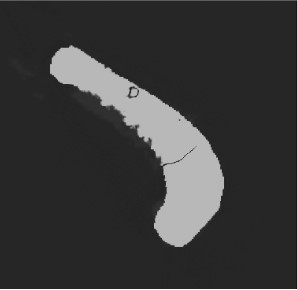
    Algorithms developed at Oak Ridge National Laboratory can greatly enhance X-ray computed tomography images of 3D-printed metal parts, resulting in more accurate, faster scans.

  • ORNL Placeholder Image

    August 13, 2020

    7 MIN READ

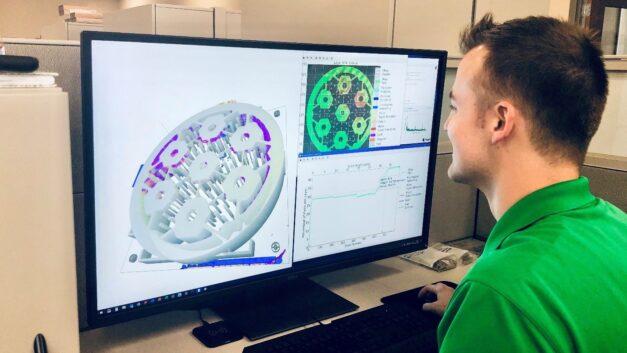
    Oak Ridge National Laboratory researchers have developed artificial intelligence software for powder bed 3D printers that assesses the quality of parts in real time, without the need for expensive characterization equipment.

  • ORNL Placeholder Image

    July 10, 2018

    5 MIN READ

    On the surface, additively manufactured parts may seem like just a series of really small welds, but the minute details of exactly how you print a component play a significant role in its performance. The approach is substantially different from that of traditional manufacturing, where the links ...

1
2