
March 31, 2026
5 MIN READ
ORNL to feature transformative tech at ARPA-E summit
Researchers at ORNL will share their discoveries and innovations at DOE’s Advanced Research Projects Agency-Energy Energy Innovation Summit in San Diego, California.
Showing 13 results for Researcher: Michael M. Kirka
March 31, 2026
5 MIN READ
Researchers at ORNL will share their discoveries and innovations at DOE’s Advanced Research Projects Agency-Energy Energy Innovation Summit in San Diego, California.
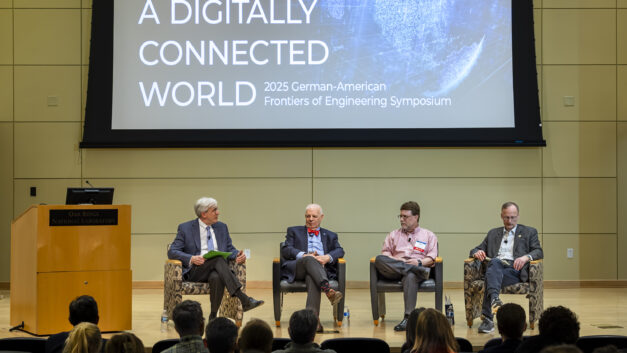
April 14, 2025
6 MIN READ
The German-American Frontiers of Engineering Symposium, hosted by the Department of Energy’s Oak Ridge National Laboratory, emphasized the importance of building relationships across national boundaries to tackle the world’s toughest engineering problems.
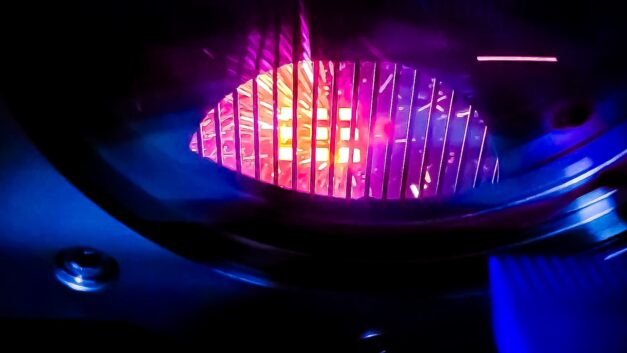
October 16, 2024
2 MIN READ
Researchers have developed and 3D printed the lightest crack-free alloy capable of operating without melting at temperatures above 2,400 degrees Fahrenheit, which could enable additively manufactured turbine blades to better handle extreme temperatures, reducing the carbon footprint of gas turbine engines such as those used in airplanes.
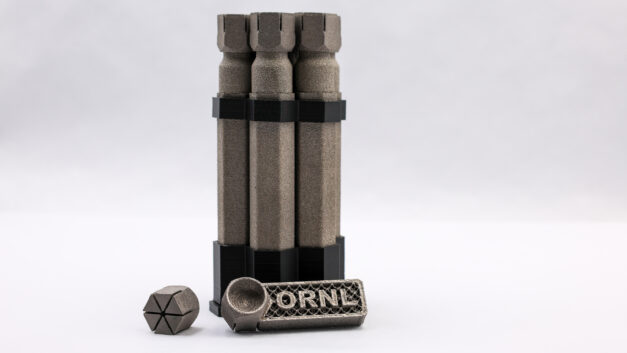
May 24, 2024
2 MIN READ
ORNL researchers used electron-beam additive manufacturing to 3D-print the first complex, defect-free tungsten parts with complex geometries.
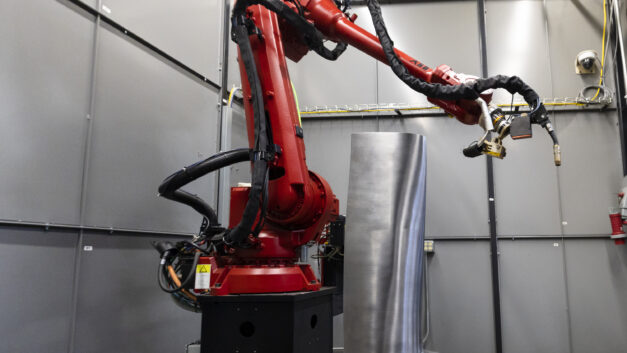
December 12, 2023
5 MIN READ
Researchers at ORNL became the first to 3D-print large rotating steam turbine blades for generating energy in power plants.

April 5, 2021
1 MIN READ
Oak Ridge National Laboratory scientists proved molybdenum titanium carbide, a refractory metal alloy that can withstand extreme temperature environments, can also be crack free and dense when produced with electron beam powder bed fusion.
March 3, 2021
2 MIN READ
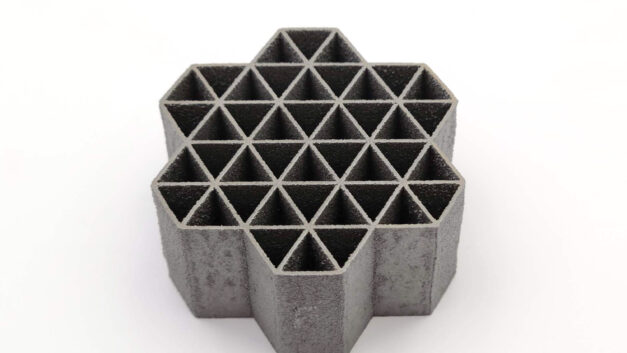
Oak Ridge National Laboratory (ORNL) and BWX Technologies (BWXT) recently developed a new way to manufacture and qualify parts and materials for high-temperature reactor applications.
February 15, 2021
1 MIN READ
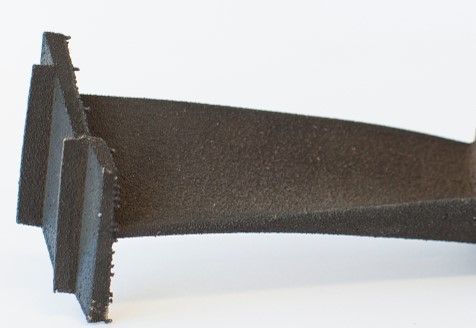
Oak Ridge National Laboratory researchers have demonstrated that a new class of superalloys made of cobalt and nickel remains crack-free and defect-resistant in extreme heat, making them conducive for use in metal-based 3D printing applications.

January 28, 2021
7 MIN READ
Growing up in the heart of the American automobile industry near Detroit, Oak Ridge National Laboratory materials scientist Mike Kirka was no stranger to manufacturing.
January 5, 2021
1 MIN READ
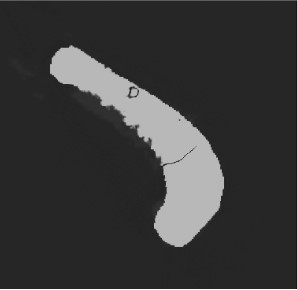
Algorithms developed at Oak Ridge National Laboratory can greatly enhance X-ray computed tomography images of 3D-printed metal parts, resulting in more accurate, faster scans.

August 1, 2019
1 MIN READ
Using additive manufacturing, scientists experimenting with tungsten at Oak Ridge National Laboratory hope to unlock new potential of the high-performance heat-transferring material used to protect components from the plasma inside a fusion reactor. Fusion requires hydrogen isotopes to reach millions of degrees.

March 2, 2017
1 MIN READ
Advanced manufacturing will benefit from additive manufacturing techniques as demonstrated by a team led by Michael Kirka of Oak Ridge National Laboratory.