News

Showing 13 results for Researcher: Carrie A. Eckert

  • ORNL Placeholder Image

    August 24, 2026

    2 MIN READ

    ORNL researchers evaluated nearly 500,000 CRISPR-Cas9 guide RNAs in E. coli and found that more than 93 percent work as intended. Their free gRNA Atlas helps scientists select reliable guides and engineer microbes more efficiently for producing chemicals, materials and medicines.
  • ORNL Placeholder Image

    May 27, 2026

    4 MIN READ

    ORNL researchers developed tSAGE, a tool that rapidly engineers heat-loving microbes for industrial biotechnology. The platform can build and test hundreds of microbial strains in weeks instead of months or years. Researchers say it could improve manufacturing of fuels, chemicals and recycled products.

  • ORNL Placeholder Image

    February 25, 2026

    9 MIN READ

    Carrie Eckert is working toward a future in which engineered microbes and plants are the workhorses of ultra-efficient biofactories, turning biomass into high-value products. As co-chief science officer for DOE's Center for Bioenergy Innovation at ORNL, she is stewarding a team of scientists across the country who are making that vision a reality.

  • ORNL Placeholder Image

    February 5, 2026

    4 MIN READ

    Scientists at ORNL have developed software that reduces the time needed for a key task in the development of custom microbes from a week to just hours. The new tool cracks a key defense mechanism of microorganisms, expediting the creation of microbes with desired traits for the production of new biofuels and other valuable products for the bioeconomy.

  • ORNL Placeholder Image

    June 9, 2025

    5 MIN READ

    The Center for Bioenergy Innovation, or CBI, at the Department of Energy’s Oak Ridge National Laboratory has promoted Melissa Cregger and Carrie Eckert to serve as chief science officers, advancing the center’s mission of innovations for new domestic biofuels, chemicals and materials.

  • ORNL Placeholder Image

    May 5, 2025

    2 MIN READ

    Scientists at Oak Ridge National Laboratory and the University of Colorado Boulder used a gene-silencing tool and a large library of molecular guides to understand how photosynthetic bacteria adapt to light and temperature changes. They found that even partial suppression of certain genes yielded big benefits in modifying the stress response of wild microbes.

  • ORNL Placeholder Image

    April 3, 2025

    5 MIN READ

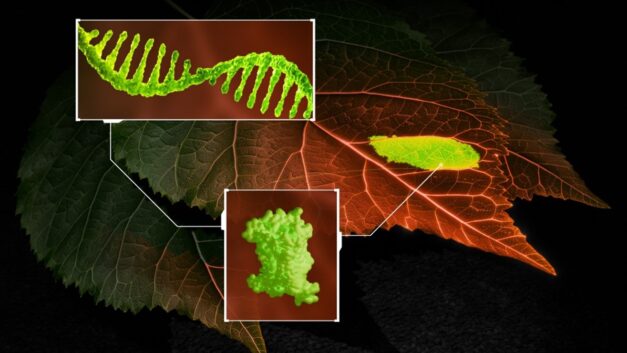
    Scientists at ORNL have developed a first-ever method of detecting ribonucleic acid, or RNA, inside plant cells using a technique that results in a visible fluorescent signal. The technology can help researchers detect and track changes in RNA and gene expression in real time, providing a powerful tool for the development of hardier bioenergy and food crops and for detection of unwanted plant modifications, pathogens and pests.

  • ORNL Placeholder Image

    November 7, 2023

    6 MIN READ

    Scientists at ORNL used their expertise in quantum biology, artificial intelligence and bioengineering to improve how CRISPR Cas9 genome editing tools work on organisms like microbes that can be modified to produce renewable fuels and chemicals.

1
2