News

Showing 13 results for Researcher: Tom L. Beck

  • ORNL Placeholder Image

    August 29, 2025

    5 MIN READ

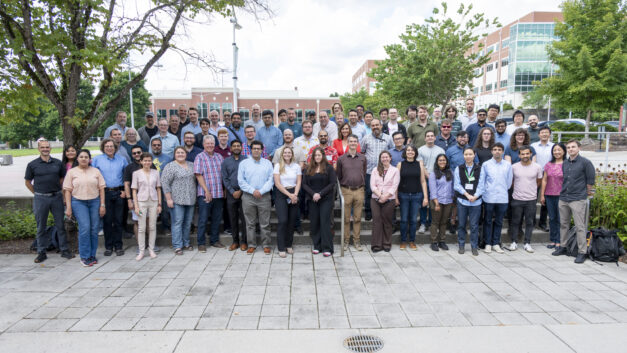
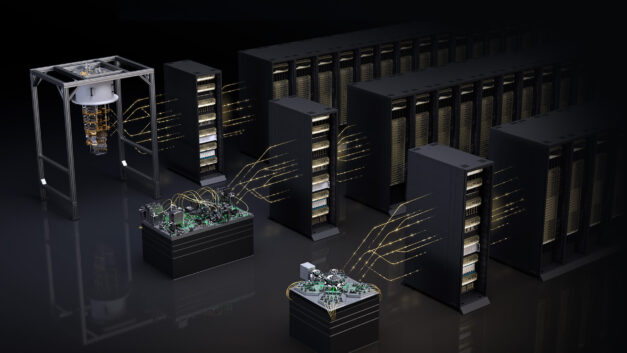
    The Department of Energy’s Oak Ridge National Laboratory hosted the first Oak Ridge Quantum Systems & Software Workshop on July 25, bringing together 75 participants from national laboratories, academia and industry. ORNL organizers launched the workshop as the first step toward building a unified software stack for quantum-classical hybrid computing.

  • ORNL Placeholder Image

    August 29, 2025

    6 MIN READ

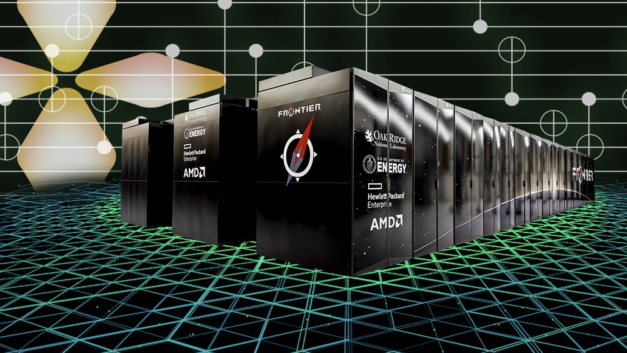
    A study by researchers at ORNL traces a blueprint for a software architecture that would integrate emerging quantum computers with the world’s fastest supercomputing systems. Finding an effective approach to pair the two vastly different computing platforms has become a prime focus for scientists seeking to tap quantum computing’s potential power.

  • ORNL Placeholder Image

    July 9, 2025

    6 MIN READ

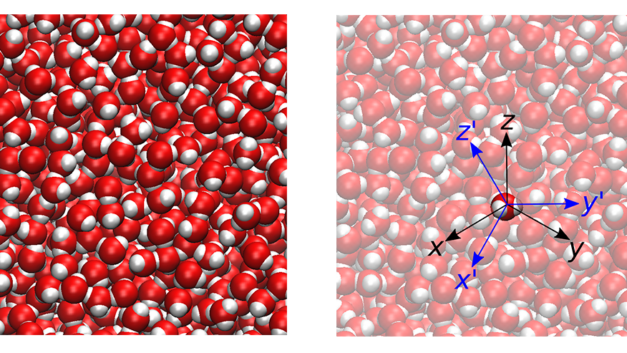
    More than a year ago, ORNL computational scientists raised concerns about the accuracy of using a 2-femtosecond time step in liquid water simulations. A new study confirms and deepens those concerns, revealing even greater potential for error than previously thought.

  • ORNL Placeholder Image

    October 14, 2024

    9 MIN READ

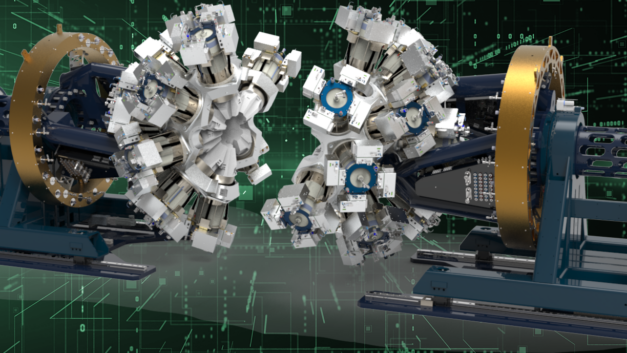
    To bridge the gap between experimental facilities and supercomputers, experts from SLAC National Accelerator Laboratory are teaming up with other DOE national laboratories to build a new data streaming pipeline. The pipeline will allow researchers to send their data to the nation’s leading computing centers for analysis in real time even as their experiments are taking place.

  • ORNL Placeholder Image

    September 10, 2024

    23 MIN READ

    As high-tech companies ramp up construction of massive data centers to meet the business boom in artificial intelligence, one component is becoming an increasingly rare commodity: electricity. Since its formation in 2004, the OLCF has fielded five generations of world-class supercomputing systems that have produced a nearly 2,000 times reduction in energy usage per floating point operation per second, or flops. With decades of experience in making HPC more energy efficient, the OLCF may serve as a resource for best “bang for the buck” practices in a suddenly burgeoning industry.

  • ORNL Placeholder Image

    May 6, 2024

    9 MIN READ

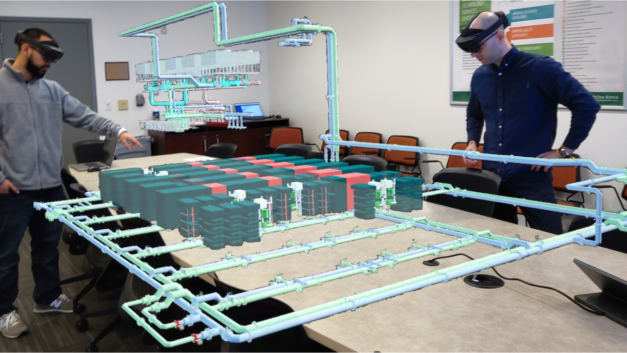
    Plans to unite the capabilities of two cutting-edge technological facilities funded by the Department of Energy’s Office of Science promise to usher in a new era of dynamic structural biology. Through DOE’s Integrated Research Infrastructure, or IRI, initiative, the facilities will complement each other’s technologies in the pursuit of science despite being nearly 2,500 miles apart.

  • ORNL Placeholder Image

    May 6, 2024

    6 MIN READ

    Computational scientists at ORNL have published a study that questions a long-accepted factor in simulating the molecular dynamics of water: the 2 femtosecond time step. According to the team’s findings, using anything greater than a 0.5 femtosecond time step can introduce errors in both the dynamics and thermodynamics when simulating water using a rigid-body description.

1
2