Implementation of Activity Plans under the Activity-Based Work Control (ABWC) project is underway across the Department of Energy’s Oak Ridge National Laboratory as the lab modernizes its processes for planning work, assessing hazards and implementing controls. For staff in the Biological and Environmental Systems Science Directorate (BESSD), progress since last year’s pilot stage to the present has resulted in lessons learned for safety leads and system users.
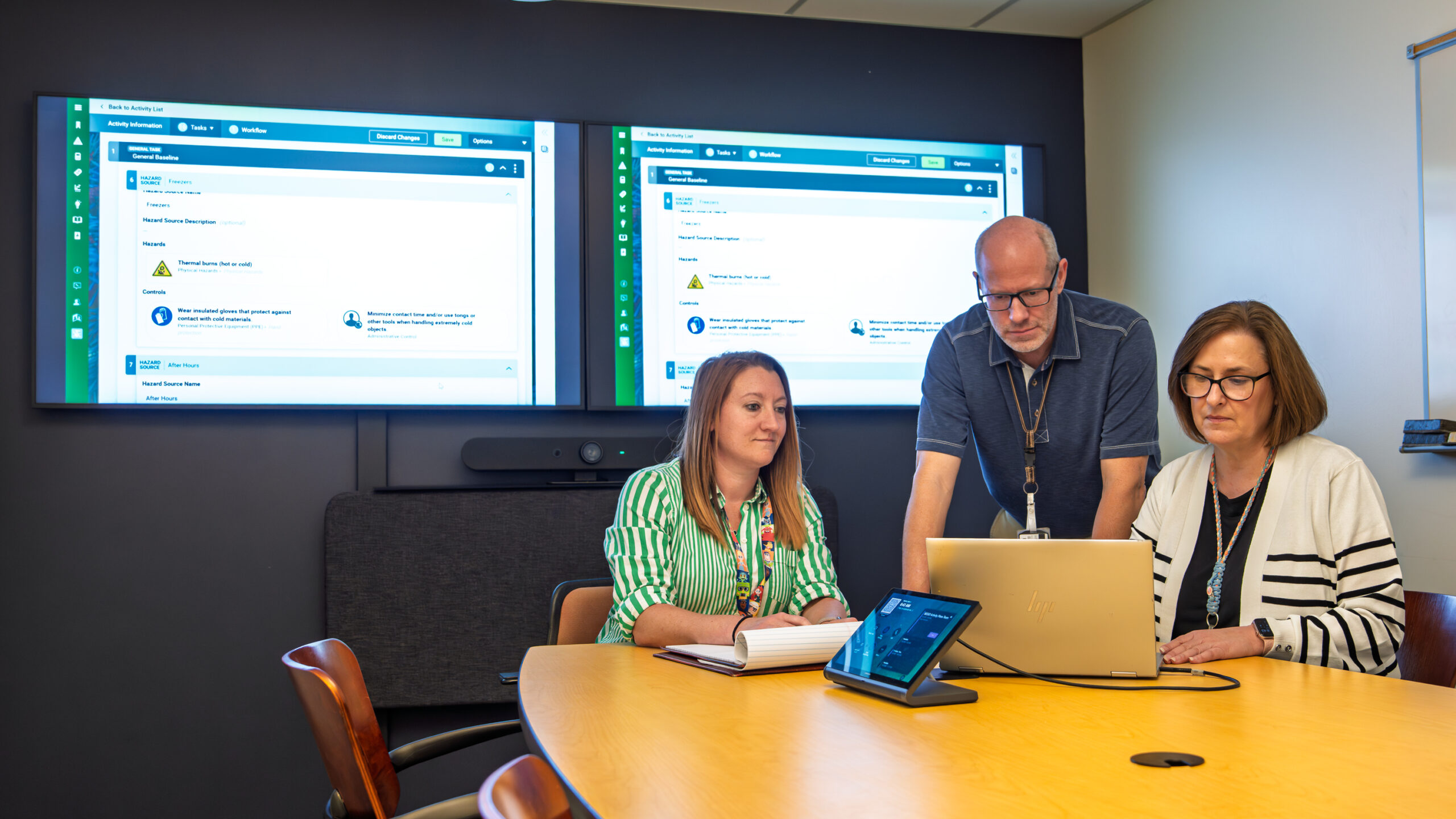
The Activity Plans (AP) tool helps individuals understand which hazards are present and establish controls necessary for performing work. The system is being phased in at ORNL, with fiscal year 2026 focused on continued integration and enhancement of the tool with added features.
From hands-on learning sessions to user feedback forums, to the preparation, review and implementation of AP, BESSD staff using the new tool indicate that they have an increased awareness of how incorporating safety at the task level can benefit their dynamic research environment. For science and technology staff, AP embeds safety in experimental design, ensuring it is a natural part of the scientific process.
End-user perspective
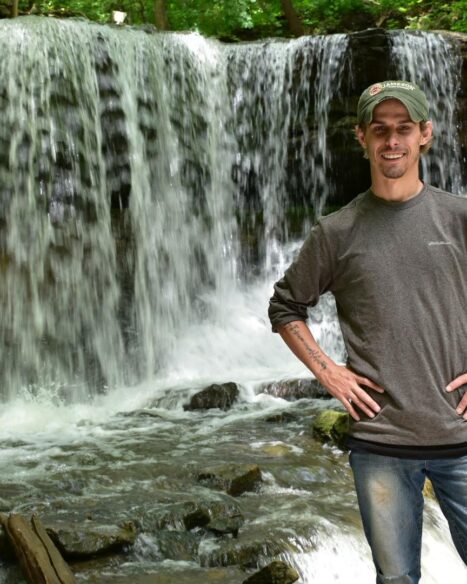
Using AP “is a matter of getting myself into the mindset of thinking about what I’m doing in the lab, as opposed to just what I’m using,” said Mac McLennan, experimental technologist and automation engineer in the Plant Systems Biology Group. McLennan is lab space manager (LSM) for the Advanced Plant Phenotyping Laboratory (APPL), an automated facility that rotates up to 500 large plants through high-resolution imaging chambers, significantly accelerating the time it takes to measure and analyze plant traits.
AP makes setting up and deploying safety controls for new tasks easier, McLennan said. He recently needed to add a new task to an approved activity plan for APPL, and found doing so took far less time than using the current Research Safety Summary (RSS) system. “It’s a good framework for developing and adding new tasks faster, especially when something comes up that we didn’t expect, and you need to account for it in the plan. I found it easier to drill down to the targeted section of the plan and customize the general controls for the new task without filtering through a lot of noise.”
The AP system “is easier to navigate than an RSS,” McLennan said. “The RSS is very large and contains every possible hazard in an entire lab. For a specific task, it’s easier to have an activity plan that clearly identifies relevant hazards.”
“Researchers who want to come in and use APPL no longer have to read through the RSS and wonder how much of it is actually relevant to what they want to do,” McLennan said. “In the old system I’d add them to the RSS and then tell them they need to concentrate on two out of the 18 sections. AP is 100 percent better at documenting safety hazards and controls for new users for their specific work. I will add them to an activity plan and let them know everything on it is relevant and they need to read it. There’s no confusion.”
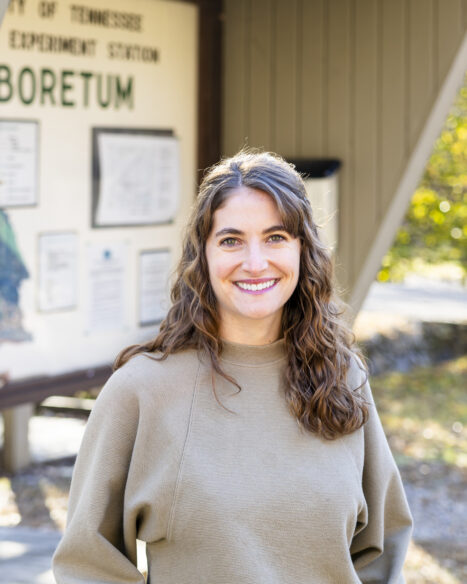
KC Cushman conducts a lot of science in the field as a forest ecologist in BESSD. She uses drones and other remote sensing equipment to gather data on forest structure and function in her work within the Ecosystem Processes Group at sites in the Southeast U.S. and as far away as Panama and Malaysia.
Cushman converted an RSS to an activity plan for her field laser scanning activities as part of the BESSD ABWC pilot — covering the use of both ground-based and drone-mounted sensing tools.
“I had a quick meeting with Megan Patel on our ops support team, and the conversion was pretty simple during the pilot,” Cushman said. “It took me about 30 minutes to read through the different tabs and become familiar with how things are organized in the new system. The layout feels logical, and I knew what to expect as a result of training sessions sponsored by my division.”
“I’ve been doing many of the same kinds of measurements at many different field sites in the last couple of years,” Cushman said. “The nice thing about AP is that it has more flexibility to go in and make a small change like uploading new field site information. The AP system is streamlining the process, making it easier to submit and get those tweaks reapproved quickly.”
Operations team perspective
Steve Cline, chief operating officer for BESSD and deputy director of the ABWC project at ORNL, said that one of the aims of the new system is to allow staff to nimbly revise documents as needed. “As we build out the system, its design will also make it easier to accommodate new work that we’ve never conducted before,” Cline said. “We can quickly add a task to an activity plan rather than shoehorning it into an RSS, where it may not necessarily fit.”
“As a starting point for those beginning to implement the ABWC concept, it’s been helpful to have LSMs and the ops team look over their RSS’s before converting them to one or more activity plans,” Cline said. “Vetting existing RSS’s is a great opportunity to make sure that everything in there is indeed still occurring and that the RSS is not just a catch-all.”
“We’re still in the learning and integration phase,” said Tonia Mehlhorn, Environment, Safety, Health and Quality (ESH&Q) coordinator for BESSD. AP is being continually refined to streamline safety documentation tasks, based on feedback from ops staff and end-users such as Mac and KC, she noted. “We sit down with our participants and we want their feedback on what they like, where we can improve, what they’re used to seeing that they’re not seeing anymore and how to make sure those functions are still available in the new system.”
One of the advantages the BESSD ops team sees in AP is to more clearly and easily define which users are authorized to use equipment. “In the past if you were a participant on an RSS, it was difficult to assign only certain people to tasks and equipment. Now when users log in to an activity plan, they automatically see their tasks populate,” Mehlhorn said.
For student users in particular, the ease of logging in and seeing specific tasks makes it easier for them to be aware of hazards and controls, safety ops team’s Patel said. “It is a very modern system. You no longer have to be trained by your mentor to read an RSS and find relevant sections. AP makes all that information transparent in a few clicks.”
During the transition to activity-based controls, the BESSD ops teams has also identified and retired several inactive tasks that are no longer relevant or part of current operations, Mehlhorn noted. “There have been challenges along the way, and the ABWC project team is rolling out new features to address issues such as library content and system structure in response. Ongoing refinements are part of the process of optimizing and clarifying the activities the directorate supports,” she said. “Once we get past the transition hurdle, using AP should be easier and faster.”
Collaborative peer review key to good planning
One thing the ops team has learned is that a very disciplined approach to the collaboration phase of the AP drafting process is essential, Mehlhorn said. “Draft plans will be peer-reviewed internally ahead of being submitted, and it’s important to include appropriate subject matter experts in that process. A good plan is based on an inclusive review in which everyone has an opportunity to express any concerns and to have their voice heard.”
Cline pointed out that the new system can also create efficiencies in division- or directorate-level activity plans. He gave the example of autoclaves, a common piece of equipment in BESSD that uses steam to sterilize experimental equipment. Autoclaving is in multiple RSS’s today, but could be converted to a single activity plan and applied across BESSD.
“Ultimately, AP is a very flexible tool, whether tasks are operational or R&D,” Cline said. “I think it is also important to keep in mind that we’re still learning best practices. Everyone needs to share grace with one another as we adapt to this system and mindset change.”
“The project team is very grateful for the support and collaboration we’ve seen on AP across the lab,” Cline said. “Staying engaged, being thorough, and sharing feedback throughout the process will help set us up for success.”
ORNL is supported by the DOE Office of Science. The Office of Science is the single largest supporter of basic research in the physical sciences in the United States and is working to address some of the most pressing challenges of our time. For more information, please visit science.energy.gov. —Stephanie Seay
Related Researchers