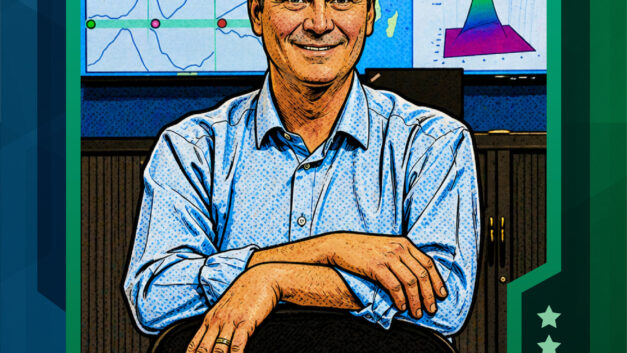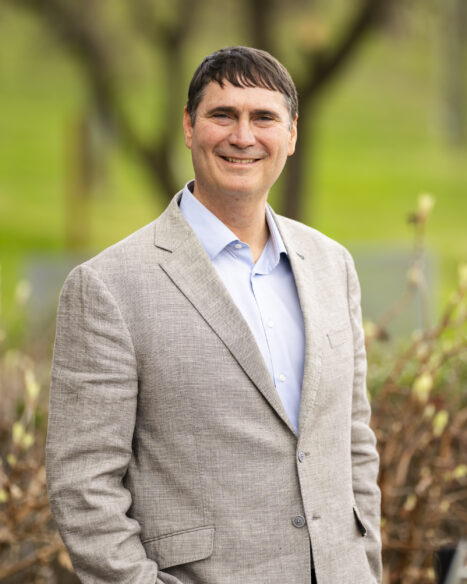
Robert is section head for the Human Security in the Geospatial Science and Engineering Division at Oak Ridge National Laboratory. Robert is also a Fellow of the American Association of Geographers, IEEE CIS Vice President for Industry and Government, an OECD Delegate, and a Bredesen Center Joint Faculty Member. His interests are primarily in the geospatial dimensions of risk and decision making under uncertainty. Areas of application vary widely including population dynamics, environmental risk, maritime safety, transport risk, climate impacts, and change detection. Preferred methods vary but are usually probabilistic in nature and grounded in spatial statistics, machine learning, probabilistic graph models, Bayesian reasoning models, and so forth. Recent interests have increasingly focused on methods for eliciting expert knowledge as Bayesian priors in applications with sparse data.
As a faculty member at UT, Robert engages graduate students in Geography, Mathematics, and the Bredesen Center Data Science Ph.D. program. He regularly serves on thesis committees, advising, and facilitating internships at ORNL. He is Vice President of the IEEE Computational Intelligence Society’s Industry and Government Activities where he fosters greater industry and government presence in IEEE. He is an editorial board member of the Journal Transactions in GIS and the International Journal of Geographical Information Science. He has served as ad-hoc National Science Foundation proposal reviewer and as an U.S. delegate to the International Working Party on Technical, Environmental and Safety Aspects of Decommissioning and Legacy Management for the Organisation for Economic Co-Development (OECD) Nuclear Energy Agency (NEA), Paris. In the past he has served as ORNL liaison to the World Health Organization Chemical Risk Network and chaired the AAG’s Geographic Information Science and Systems Specialty Group at AAG. Robert is a member of the AAG (Fellow), IEEE (senior member), ASA, ISBA, and AAAS. He has served on numerous other panels/committees, and organized many conference workshops.
Before arriving at ORNL, Robert was a senior research scientist at the University of Tennessee where he engaged in a variety of projects around spatial analysis including initialization and maturation of the SADA program which is continue today. SADA is internationally recognized for its success in “spatializing” regulatory human and ecological risk models and integrating it across all aspects of the characterization and restoration process from sample design to final decision outcomes.
In 2011 Robert received his Ph.D. from the Geography Department at the University of Tennessee for his work in connecting the spatial sciences with exposure modeling and regulatory guidance for radiological contaminated sites. Robert holds a Masters and Bachelor of Science in Mathematics from UT as well.
Feel free to use this short biography for conferences, panels, etc: Dr. Stewart is section head for Human Security in the Geospatial Science and Engineering Division at Oak Ridge National Laboratory. He leads interdisciplinary teams specializing in population modeling, location intelligence, critical infrastructure resiliency, geoinformatics, and geospatial data modeling. With 32 years of national laboratory experience, he has authored over 85 publications and translated science into operational tools used across public, private, and governmental sectors. He actively serves on several national and international panels, is a Fellow of the American Association of Geographers, is Vice President for IEEE Computational Intelligence Society, and holds a Joint Faculty position in the University of Tennessee Bredesen Center for Data Science.
Links
Publications
Apr, 2026
ORNL Report
Morphology-Based Building Use-Type Modeling: Learnability-First Schema Discovery