
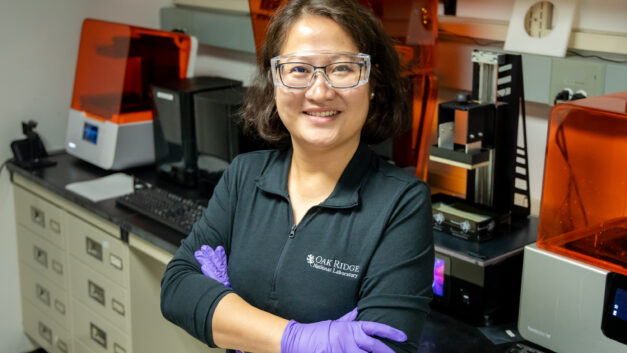
I joined ORNL in the fall of 2022 as a Distinguished Staff Fellow at the Center for Nanophase Materials and Sciences (CNMS). My primary research interests are in fundamental and applied science of macromolecular interactions in bulk and at interface, particularly with renewable macromolecules. Through understanding the material forming and assembling mechanism using multiscale characterizations, we aim to develop controlled processes for material formation based on the principle of chemistry, as well as adding robustness and/or new functionality to the reassembled materials.
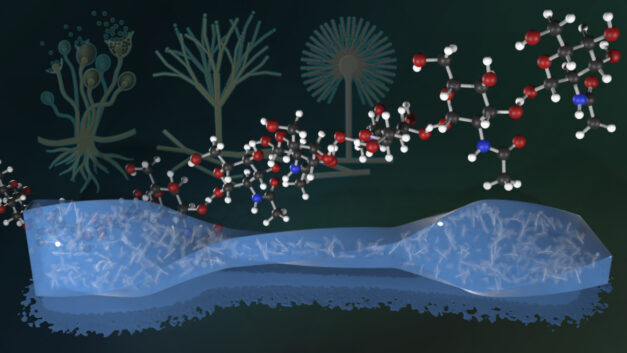
With a PhD in Fiber and Polymer Science from NC State, my dissertation research focused on low energy bio-based carbon capture technology using aqueous solvents and facilitated water-liquid-gas contact through restricting water transportation in structural materials. In 2019, through an internship at the Center for Structural Molecular Biology (CSMB), ORNL, we reported the first deuterated chitosan from filamentous fungi with novel deuteration approaches. I conducted research in Nanotechnology Innovation Center at Kansas State (NICKS) when accomplishing my master degree in Textile Science at Kansas State University. The research projects mainly focused on functionalizing polymers to obtain advanced materials with nanoscale features for superhydrophobicity and antimicrobial properties, as well as the study of the interactions between water and solid surface. Prior to joining ORNL, I worked as a tech consultant in RTI International, a non-profit research institute, to support federal and industrial clients on chemicals and manufacturing in fields including clean energy.
The dissertation research introduced a new category of material that has hierarchical structure and biocatalytic function. These novel materials are nontoxic, renewable, and biodegradable and have potential for scaling up. The “drop-in” biocatalytic reactor design will benefit low-energy, low-cost post combustion carbon dioxide capture operations without redesigning the gas scrubbing unit in power plants. The study also uncovered the mechanism of enhanced catalyzed reactions at liquid–gas–solid interfaces.
Links
Publications
News
April 24, 2023
7 MIN READ
Yue Yuan, Weinberg Research Fellow, uses nature to create sustainable materials