News
Showing 18 results for Researcher: Jong K. Keum
-
January 12, 2024
2 MIN READ
Armor for steel
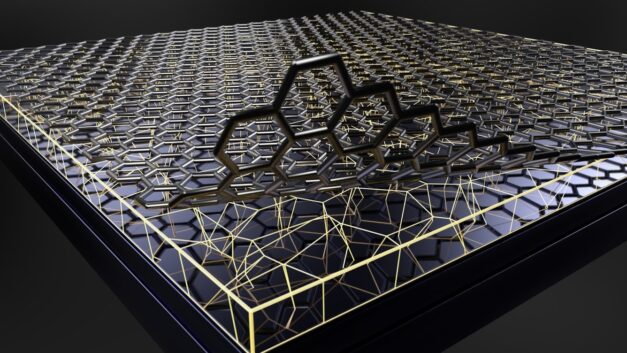
Researchers demonstrated that stainless steel and other metal alloys coated with hexagonal boron nitride, or hBN, exhibit non-stick or low-friction qualities along with improved long-term protection against harsh corrosion and high-temperature.
December 12, 2019
1 MIN READ
Light-Ferroic Interactions in High-Performance Photovoltaic Materials
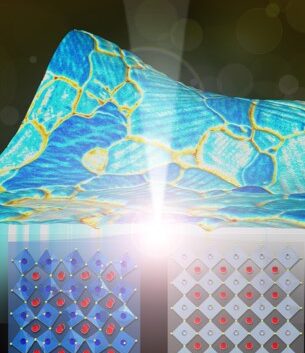
Although hybrid organic-inorganic perovskites (HOIPs) have made impressive progress in applications in solar cells, light emitters, photodetectors, etc., the quest to advance the fundamental understanding of the photo-physics of HOIPs remains highly relevant.
August 1, 2019
1 MIN READ
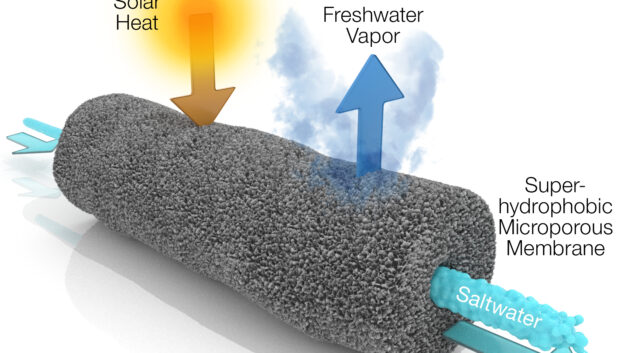
Clean water—Sunny desalination
A new method developed at Oak Ridge National Laboratory improves the energy efficiency of a desalination process known as solar-thermal evaporation.
May 1, 2019
1 MIN READ
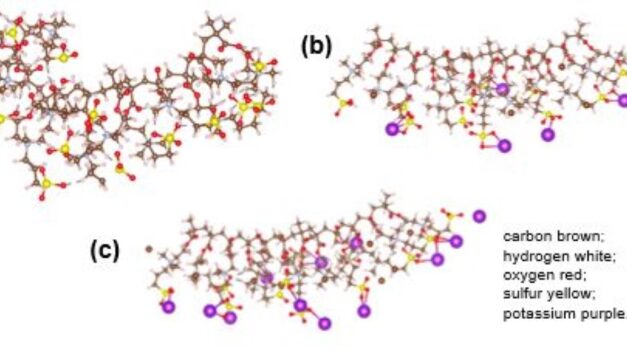
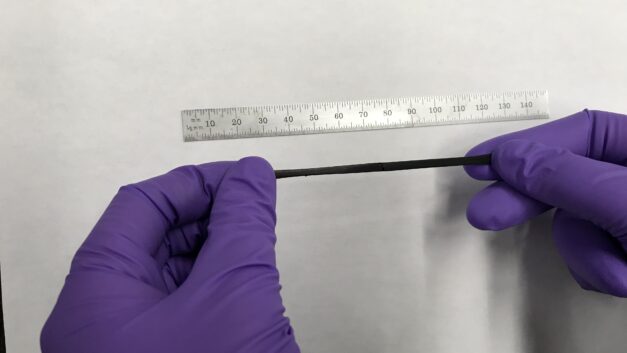
Materials—Mussel-like stickiness
Scientists at Oak Ridge National Laboratory have developed a new, stretchy plant-derived material that outperforms the adhesiveness of the natural chemical that gives mussels the ability to stick to rocks and ships.
February 22, 2019
1 MIN READ
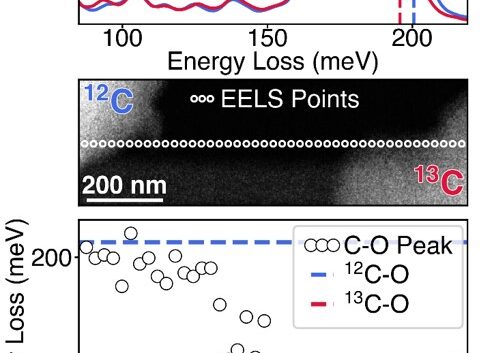
Electrifying Neutrons: Identifying Isotopes in the Electron Microscope with Nanoscale Spatial Resolution
Isotope labeling is a heavily utilized technique in the study of proteins and amino acids that allows specific molecular groups to be tracked through complex chemical reactions. However, most techniques used for this are destructive, e.g., the sample is destroyed, and critical structural information is lost or sample undergoes local changes and inhomogeneities are no longer observable. As reported in Science, CNMS scientist were able to use electron microscopy to perform nanoscale, non-destructive, site-specific identification of isotopic labels without inducing electron beam damage. J.A. Hachtel, J. Huang, I. Popovs, S. Jansone-Popova, J.K. Keum, J. Jakowski, T.C. Lovejoy, N. Dellby, O.L. Krivanek, and J.C. Idrobo, “Identification of Site-Specific Isotopic Labels by Vibrational Spectroscopy in the Electron Microscope, ” Science, 363, 525 (2019). DOI: 10.1126/science.aav5845
January 31, 2019
5 MIN READ
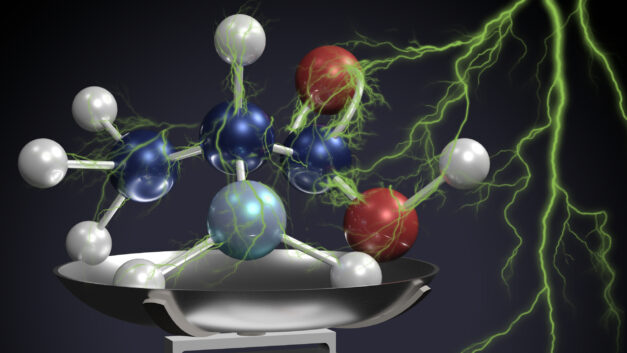
Novel electron microscopy offers nanoscale, damage-free tracking of isotopes in amino acids
A new electron microscopy technique that detects the subtle changes in the weight of proteins at the nanoscale—while keeping the sample intact—could open a new pathway for deeper, more comprehensive studies of the basic building blocks of life.
January 2, 2019
1 MIN READ
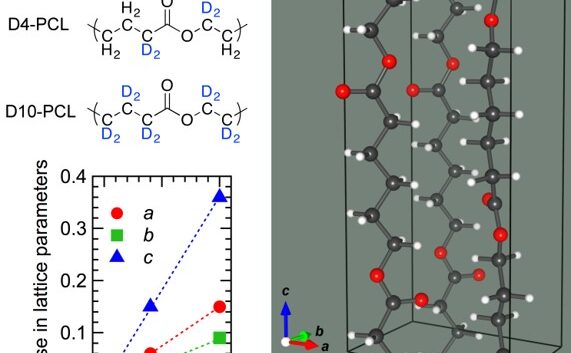
Tuning Biocompatible Polymers with Deuteration
This work is one of the very few studies comparing the effects of partial versus full deuteration on the structures and properties in semicrystalline polymers. The work developed large-scale and precise synthesis of selectively deuterated, poly(ε-caprolactone)s (PCLs) with control over the crystal lattice parameters as a function of the deuteration levels. Such deuteration effects on biocompatible polymers like poly(ε-caprolactone)s, potentially enables rational tuning of their structures and properties. D. Chang, T. Li, L. Li, J. Jakowski, J. Huang, J. Keum, B. Lee, P. V. Bonnesen, M. Zhou, S. Garashchuk, B. G. Sumpter, and K. Hong, "Selectively deuterated poly(ε-caprolactone)s: synthesis and isotope effects on the crystal structures and properties," Macromolecules 51 (22), 9393-9404 (2018). DOI: 10.1021/acs.macromol.8b01851

December 18, 2018
3 MIN READ
New composite advances lignin as a renewable 3D printing material
Scientists at the Department of Energy’s Oak Ridge National Laboratory have created a recipe for a renewable 3D printing feedstock that could spur a profitable new use for an intractable biorefinery byproduct: lignin.

September 6, 2018
5 MIN READ
Synthesis studies transform waste sugar for sustainable energy storage applications
Biorefinery facilities are critical to fueling the economy—converting wood chips, grass clippings, and other biological materials into fuels, heat, power, and chemicals.
