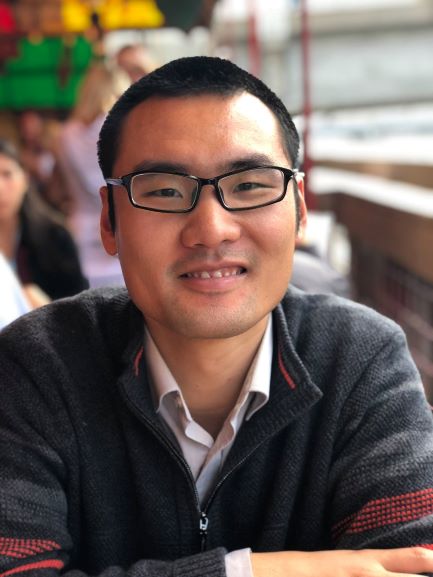
Dr. Xiao Wang is a Research Staff Scientist in the Computational Science and Engineering Division at Oak Ridge National Laboratory (ORNL) and a faculty member in the Data Science and Engineering Program at the University of Tennessee, Knoxville (UTK) with additional appointment in Computer Science Department. His research lies at the intersection of artificial intelligence (AI), high-performance computing (HPC), and computational imaging.
Dr. Wang develops scalable and efficient AI foundations, algorithms, and mathematical frameworks for imaging and spatiotemporal scientific data. A central theme of his research is enabling scientists to see beyond instrument or simulation limits—using scalable AI and HPC to achieve unprecedented resolution, fidelity, speed, and predictive capability in scientific observations. His research team develops next-generation exascale AI systems capable of learning from multimodal scientific data and operating efficiently on leadership-class supercomputers.
His work can be summarized into three pillars:
(1) Scalable AI & HPC: Development of efficient AI foundation models, distributed and efficient computing algorithms, neural scaling laws, and computational methods that enable scalable and efficient training and inference large AI models on leadership-class supercomputers.
(2) Mathematical AI: Development of mathematical frameworks—including inverse problems, optimization, uncertainty quantification, and physics-informed learning—that integrate scalable AI with the underlying physics of imaging and spatiotemporal scientific data.
(3) Scientific Applications: Development and validation of these scalable AI and mathematical frameworks across imaging and spatiotemporal scientific domains, including medical imaging, climate science, hydrology, cosmology, remote sensing, microscopy, neutron, materials characterization, and national security. The goal is to establish scalable AI, HPC and mathematical principles that transfer across imaging and spatiotemporal domains, rather than developing domain-specific solutions for individual applications.
Prior to joining ORNL, Dr. Wang received his B.S. degrees in Mathematics and Computer Science from Saint John’s University and his M.S. and Ph.D. in Electrical and Computer Engineering from Purdue University, where he was advised by Dr. Charles Bouman and Dr. Samuel Midkiff. He subsequently completed postdoctoral training at Harvard Medical School and Boston Children’s Hospital, focusing on advanced medical imaging and image reconstruction and mentored by Simon Warfield.
Dr. Wang has received several recognitions for his contributions to computational imaging, scientific AI, and high-performance computing, including winning the SC25 Best Paper Award, 2025 ORNL Computing and Computational Sciences Directorate Distinguished Researcher Award, the 2024 HPCwire Top Supercomputing Achievement Award, the 2022 AAPM Low-Dose CT Grand Challenge, and the 2018 Pediatric Radiology Young Investigator Award. He was also a finalist for the ACM Gordon Bell Prize in 2026, 2025, 2024, and 2017 for his work in large-scale computational imaging and earth system modeling. He won the Purdue Engineering 38 by 38 alumni award.
His current research focuses on the intersection among HPC, efficient AI, and computational imaging.
Publications
Sep, 2026
Conference Paper
RoadBench: A Vision-Language Foundation Model and Benchmark for Road Damage Understanding
Aug, 2026
Conference Paper
Dispersion Loss Counteracts Embedding Condensation and Improves Generalization in Small Language Models
News
December 10, 2024
4 MIN READ
Calculations on Frontier earns Gordon Bell Prize, ORNL major presence at SC24